If you think it is, then you’ll be dying inside before you physically die.
Ponder over this – you’ve honed your skills and become probably the absolute best version of yourself after all these years in your vocations/career/business (even if you are in a job which you disliked).
It is sensible to just discard all that?
You can always leverage on the skills you’ve honed over your most productive working years to do something during retirement years.
Something where you will be to call your own shots.
In other words, autonomy.
Watch the lesson below on how important it is to have autonomy, and the one thing you need to practice to maintain autonomy in your life, more so in retirement years.
To retire in Malaysia, or any place for that matter, everyone would agree that we need to ensure sufficient financial resources.
It could be in lump sum or periodical cash flow, but the bottom line is that, total liquid assets must be able to sustain a comfortable lifestyle.
This is especially important considering you are required to lock in at least RM (Ringgit Malaysia) 150,000 at any Malaysian bank under MM2H or Malaysia My Second Home program for retiring in Malaysia.
After all, that’s the purpose of retiring to Malaysia, yes? To stretch your money further than if you were to retire in your home country, be in UK, Canada, United States or other parts of the world.
Look, here’s the deal:
I am not going to tell you how good it is to retire in Malaysia. Or where is the best place to retire in Malaysia. Or even how to apply for Malaysia My 2nd Home program.
There are countless websites, blog and articles covering these topics.
Instead, I am going to boost your odds of outliving your retirement nest egg if you are considering to retire in Malaysia. Whether you are a high net worth or mass affluent individual, my ultimate retirement guide here will show you how to protect, preserve and possibly grow your assets in Malaysia.
1) Retire in Malaysia: Manage the inflation risk and outlive your retirement nest egg
Inflation in Malaysia averages between 2% to 3% per year. This is measured by the CPI (Consumer Price Index) indicator from Department of Statistics of Malaysia. We take 3% as conservative estimate for computation in retirement planning. However, bear in mind this could very likely be higher due to your personal lifestyle.
Coincidentally, Malaysia risk free rate of return stands at circa 3% at time of this writing (2016), which tracks the nation’s interest rate.
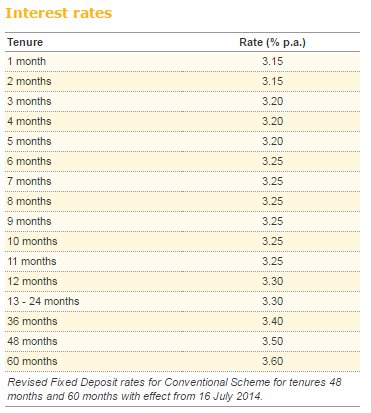
That means, if you put your money in any Malaysian bank cash deposit (or more famously known as fixed deposit among locals) for monthly renewal, you earn 3% per annum return on your money. You could get higher rates if you lock in for longer period, for example you may refer to the interest rate table here.
That’s RM 3,000 for a RM 100,000 deposit, or RM 30,000 for a RM 1 million deposit. Not too shabby compared to near zero fixed deposit rates at United States or even neighboring country Singapore.
There has not been drastic change in the risk free return rate for the past 10 years since the 2008 economic crisis.
Now, you might be wondering:
Is this the best time to make to move to migrate to Malaysia for retirement, perhaps taking the famous MM2H visa?
In case you have not realized it, Malaysian Ringgit has been in depreciation mode against USD since 2015 compared to where it were at 1 Dollar = 3.2 Ringgit.
Want to know the best part?
Ringgit is now at ALL TIME LOW since 50 years ago.
Suffice to say that if you are an American, Canadian or British planning to retire to Malaysia, this is one of the best time to maximize the value of your retirement nest egg at 1 Dollar = 4+ Ringgit. More mileage for your money.
Here’s the kicker:
For just USD 250,000, you are literally a Ringgit millionaire in Malaysia!
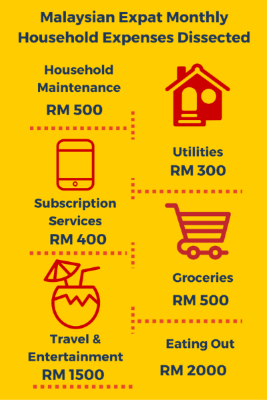
And this is to give you an idea of the monthly cost of living if you were to retire in Malaysia. Discretionary living costs such as eating out, travel and entertainment may vary depending on what type of person you are.
However, it is no brainer that you can save a lot by cooking at home and live in say, Penang instead of KL, especially if you are not a party goer person. Transportation wise, cycling lanes are aplenty in Penang, and UBER is also available. Therefore, you could utilize this instead of spending a huge lump sum to get a new car although under MM2H program, there is a special price incentive.
Back to the topic of inflation:
Now, you, a Ringgit millionaire overnight, may feel that 2% to 3% reduction in purchasing power (or increase of 2 to 3% cost of living) isn’t alarming at all. My advice is: don’t underestimate the power of compounding.
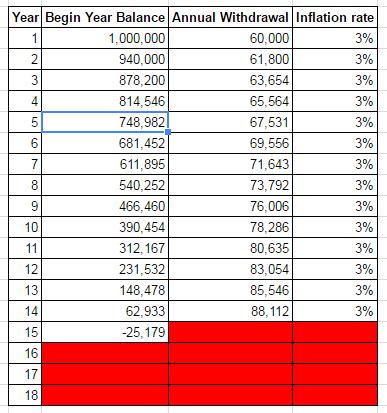
In fact, 1 million retirement nest egg will only last you just short of 14 years if you withdraw RM 5,000 per month adjusted for 3% annual inflation, without reinvesting the balance.
Besides that, there are drawbacks of becoming a Ringgit millionaire too.
The weakened Ringgit valuation – with no end in sight, you want to expect the cost of imported goods to go up as well. This is especially true when you are used to certain brands of household items back in your home country, and are reluctant to buy local brands.
Hint: 2 popular grocery stores which caters for expats – Sam’s Groceria and Cold Storage.
Furthermore, this does not factor in any other financial contingencies. Like going for that cruise vacation. Or visiting popular neighboring cities like Bangkok, Bali and Singapore.
In other words, it is likely that you will run out of money before running out of life!
Suddenly, retirement planning does not look so straightforward as you thought. Then, there are other questions to ponder over below as well:
What is the expected life expectancy? Ignore the mortality statistics – you want to look at how long your parents and grandparents live instead.
How much additional active or passive income you are generating from your liquid or illiquid assets in your home country which could be used to supplement your retirement cost of living in Malaysia? Most retirement calculators fail to factor in this aspect.
Your expenses may drop as you get older because, well, let’s be honest, you should have done what you want to do in the early years of your retirement in Malaysia. Another reason is that your mobility may get reduced as you get older. How to factor in variables like this?
Your retirement nest egg should not stay ‘stagnant’ because the remainder balance of your retirement nest egg after withdrawal will be reinvested. We need to compute for this, and hence your retirement nest egg in Malaysia could last slightly longer than 14 years as indicated above.
In retirement planning, there is 2 methods called capital liquidation method and capital preservation method. Whether to use one or another depends on whether you want to leave certain amount of legacy to anyone you care about. How to compute for that?
Our RetireMethod Scenario Modelling & Visualization Tool in Section 5 below can answer all the 5 critical questions above, and accomplish a lot more which normal retirement calculator cannot compute.
Moving on.
2) Retire in Malaysia: Get the best ‘bang for your buck’ health insurance and Prevent ever-rising medical cost from touching your retirement fund
Are we in agreement that medical costs will carry one or more of the characteristics below:
Most unexpected
Most unavoidable
Possibly long term & recurring
Most impactful to retirement nest egg
How impactful, you asked?
The costs of medical treatment
For minor condition like cataract or appendicitis, the cost of such treatments may hardly dent your retirement nest egg. But what if major conditions like below hit you?
Medical costs have escalated around the world and this is no different in Malaysia. Medical inflation averages about 10% each year and is projected to rise due to advancement in medical technology.
In Malaysia, public hospitals are subsidized by the government and provide affordable healthcare to the masses. Non Malaysians need to pay a nominal sum though. They do offer good medical treatment but patients may be subject to longer waiting times and perhaps, less personalized attention from the doctors due to the volume of patients they need to oversee.
The fact is, non Malaysians are discouraged from seeking medical treatments in public hospitals. That is why one of the requirement of MM2H (Malaysia My Second Home) program is to buy a health insurance policy in Malaysia.
Health insurance policy, formally known as hospitalisation and surgical insurance or casually known as medical card, provides for medical expenses incurred due to illnesses covered under the policy. The medical card itself is actually providing convenience of cashless admission to private hospitals.
Medical tourism – world class healthcare facility in Malaysia
More affordable air travel (think AirAsia), mounting health care costs in developed countries, and an ageing world population have all contributed to a global explosion of medical tourism in the past decade. Malaysia is leagues ahead in terms of its world market share.
Both Penang and Kuala Lumpur are serviced by airlines from around the world; have a plethora of reasonably-priced hotel rooms; and when you arrive in Malaysia most nationalities are given a 3 months social visit visa even you are not on MM2H (Malaysia My Second Home) program.
“I love it here. I’ve bought a house, established a life, and my wife and I absolutely love it. The hospitals are fantastic, the staff simply amazing. I just wish that I had made the move earlier.” Dr. Neil Solomons, a cosmetic and Ear, Nose and Throat surgeon, living in Penang and practising surgeon at Lam Wah Ee Hospital Penang. Previously worked in UK.
To give you an idea of the cost of just one procedure, a full-face lift in the U.S., including a chin lift (sometimes done separately or not at all), can be as much as $35,000. In Malaysia it’s half the price. When you think that you can add on a week of rest and recuperation somewhere, like on the exotic island of Langkawi, in a 5-star hotel, and still save $10,000 on what it would have cost you in the U.S., it’s no wonder that Malaysia’s medical tourism industry is on the rise.
Western accreditation is also a primary factor for confidence in undergoing foreign medical treatments, and hospitals in Penang and Kuala Lumpur were among Southeast Asia’s first recipients of the United States’ prestigious Joint Commission International (JCI) certification, which is seen as the gold standard for health care service providers around the world. Now Malaysia has 10 JCI-accredited hospitals for medical tourists to book with.
In short, the hospitals are first-rate and the doctors in Malaysia are either trained in the U.K. or the U.S. or they have done their postgraduate studies there. And all of them speak English fluently.
Health insurance aka medical card in Malaysia – get the best one with the features you need
The intricacies of the best medical card for you is not to be underestimated if you plan to retire in Malaysia for long term. Since health insurance, just like any other insurance, is essentially an unilateral contract, knowing the terms and conditions of your medical coverage is absolutely critical.
Why?
To prevent the hassle of dispute with the insurer on what it is not covered or reimbursable when you thought they are covered.
The other health insurance features you definitely want to take note on are:
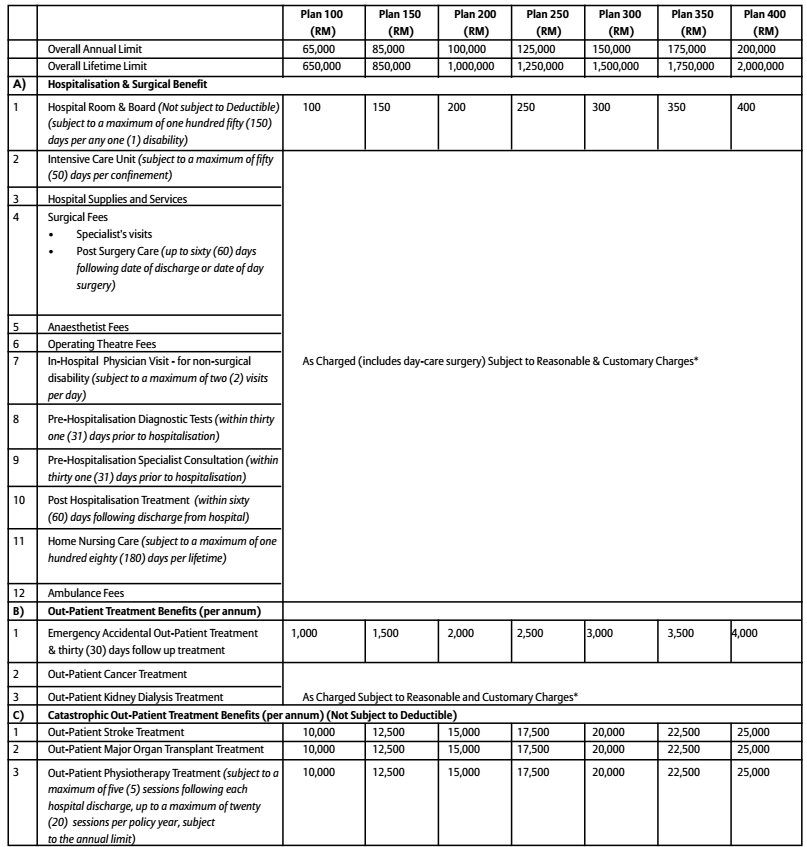
Daily Room & Board rate – determines the type of hospital room you can choose to stay in without topping up the difference. It is very normal to go for a minimum RM 200 R&B nowadays, which could be a twin-sharing room. If you want basic single room or above, a R&B of RM 300 and above is recommended. Upgrading R&B rate higher than what you are entitled for in your health insurance policy may trigger a certain co-payment clause in the insurance contract. This render you needing to share a certain percentage of the total medical bill with the insurer, aside from paying the difference in room & board rate.
Lifetime Limit (if any) – specifies the limited sum of medical expenses which can be exhausted throughout the duration of coverage.
Annual Limit (if any) – specifies the limited sum of medical expenses which can be exhausted within any 1 policy year.
As charged – covers hospitalization expenses which are deemed medically necessary, and as per reasonable and customary charges according to the schedule set by MMA (Malaysian Medical Association). If a medical procedure was being overcharged by hospital, then you need to top up the difference of amount for which the insurer doesn’t cover.
Last entry age – the last age where you can buy a health policy. Normally it could be at 60, 65 or 70.
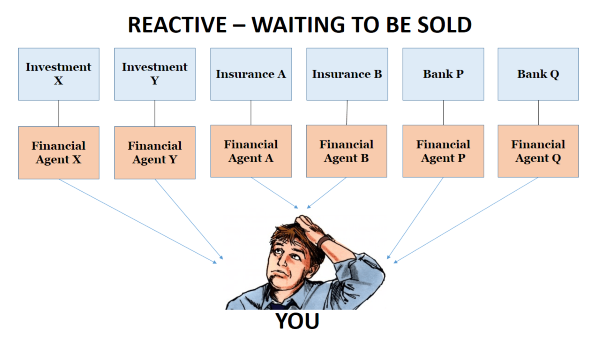
As a fiduciary financial adviser, we provide non-biased comparison of all major health insurer providers in Malaysia. As opposed to approaching tied agents from multiple insurance companies, they would not be able to highlight to you what are the weak points in their products. We believe every product has its weakness, the question is whether that very feature is important to you.
And to wrap up this section, here are the medical card features you should be aware of.
3) Retire in Malaysia: Invest for dividend & cash flow and abandon the need to ever withdraw the principal portion of your retirement fund again
Getting Guaranteed Return at no Risk
If you hail from countries like the US where interest rate is near zero percentage, a 3% guaranteed return every year in Malaysian fixed deposit does appear like an offer you can’t refuse.
Agree?
We have clients who are contented with putting money into Malaysian fixed deposit, generating return of 3% every year – guaranteed and risk free.
Why not, right?
After all, capital preservation & protection is more important in retirement than anything. Why risk your money?
Say you have RM 2.5 million in liquid cash. When you decided you want to retire in Malaysia, you transfer it over into a fixed deposit account in any Malaysian bank. At 3% per annum return, you are getting RM 75,000 per year, or RM 6,250 per month.
RM 6,250 per month – this amount of tax free income can yield you a pretty comfortable lifestyle if you are not a big spender, even for expatriate family. See Section 1 – Malaysian expat household expenses dissected.
Getting Consistent Dividend at Low Risk
However, if you want something higher than 3% per year, still comes with low risk, low management and low cost, you might be thinking – how about ETF – Exchange Traded Funds?
Unfortunately, ETFs in Malaysia are still underdeveloped. The trading volume is small, rendering it illiquid.
Malaysian REITs are trusts which invest in properties only. They are traded on stock exchanges and the dividends are tax free in the hands of investors. The price of REIT counters don’t budge much – mostly horizontal price movement, hence making it low management. The only cost involved is brokerage fees, which comes about as low as 0.1% for transacted amount.
Here are 4 reasons why you should consider investing in REITs in Malaysia:
1. Get exposure to the top shopping malls and commercial buildings
With MREITs, you will be able to buy into the top shopping malls in Malaysia. Malls such as Pavilion (Pavilion REIT), MidValley Megamall (IGB REIT), Sunway Pyramid (Sunway REIT) are all available on Kuala Lumpur Stocks Exchange.
In other words, the underlying assets are correlated with some of the premium commercial properties in major cities. Income generating properties like shopping malls are pretty resilient in their ability to generate income even in anemic economic times. Hence, this fulfills the low risk criteria.
And I am obliged to tell you that in this part of the world, rental almost always go up. It is not a matter of ‘what if’, but it is a matter of ‘when’.
2. Earn consistent & sustainable dividends
This is perhaps the most important because we must prioritize cash flow over capital gain when you retire in Malaysia.
Now, like property rentals, MREITs also generate income in the form of dividends to investors like clockwork. Since MREITs are usually diversified, vacancy rates are generally low so they are a more stable form of income as compared to physical properties which could have vacancy periods.
The frequency of dividends payout for REITs is quarterly or bi-annually, making them an ideal investment for retirement income. To make it even more attractive, the dividend payout for REITs tend to be pretty high as they need to pay out at least 90% of their net income so that the REIT will be tax exempt.
3. No hassle in buying and disposing MREITs
As MREITs are exchange traded, buying and disposing your holdings them is generally easier compared to physical properties. MREITs are bought and sold like normal stocks so the prices are transparent and the transactions take place instantly.
4. Minimal effort required
One of the key advantages of MREITs is that there is minimal effort required to maintain these investments. MREITs hire professional management teams to manage the tenants and upkeep of the properties, leaving you to enjoy the fruits of your labour. Anyone familiar with property investments will know that there is in fact a lot of work involved in managing your own properties.
At current market condition, net dividend yields of most MREITs are pretty attractive compared to other investments, ranging from 5% to 7%.
Avoid insurance plans disguised as investment plans
If stay and retire in Malaysia, inevitably you will encounter agents from even very reputable insurance companies OR relationship managers at banks, pitching you some form of single/regular premium insurance products structured (and disguised as!) as investment plans.
The unfortunate thing about these products is that they are perfectly legitimate. They are often packaged & marketed as being able to generate more than 3% per annum while providing basic life insurance coverage.
Sounds like a great combo?
Nope.
Here’s the bottom line.
Banks and insurance companies are both conglomerates. If an insurance ‘savings’ plan aka endowment plan can generate more than 3% guaranteed for its policy holders, shouldn’t bank be able to offer the same return to its customers?
After all, it is a competitive market out there. If insurance company can do “X”, bank will match it.
Why, then, fixed deposit rate stays at 3%? The truth is, only the financially illiterate and those who do not conduct due diligence would be fooled into thinking a endowment plan can provide a “real’ 3% per annum compounded return (aka IRR Internal Rate of Return) over the duration of the policy.
The truth is, their real return will be lower than fixed deposit’s 3% per annum.
4) Retire in Malaysia: Identify Investment scams and prevent them from preying on your retirement fund
What’s worse than endowment plan aka insurance savings plan which gives you lower than risk-free-rate of return?
Scams. The Ponzi scheme type.
Not unlike what Bernard Madoff was running before he get caught.
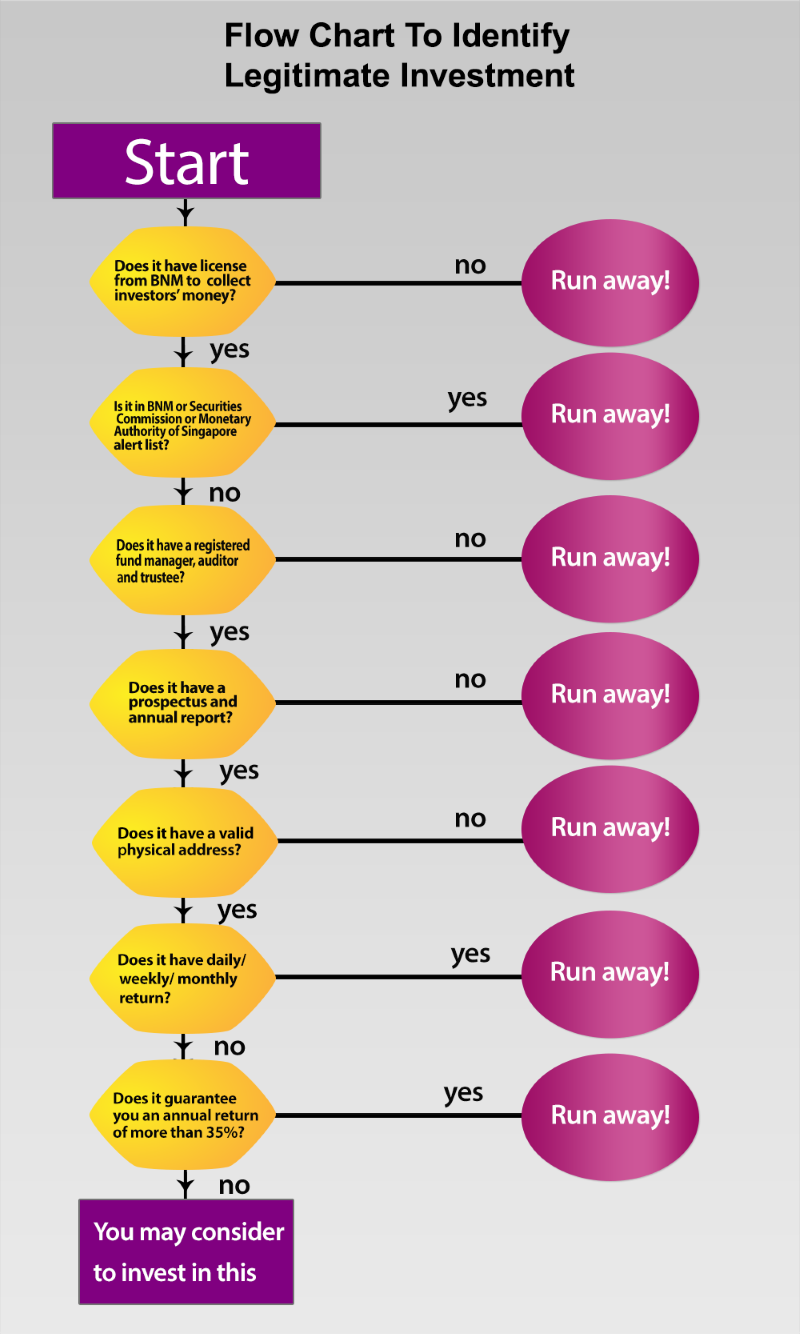
Here are 2 main ways to identify investment scams.
Firstly, use this mental flowchart to detect if anything is off.
Here’s the kicker:
The world’s famous and most successful investor, Warren Buffett, on average, achieved an annual compounding return rate of 21% over the past 51 years in this 2015 Berkshire Hathaway annual report. It may be possible to achieve more than this on non-market correlated investment (such as private equity deals or hedge funds) for a single year or another but not for 51 years consistently for sure.
Secondly, use these websites to check if any of the schemes are in Securities Commission and Bank Negara Malaysia Alert list.
Sometimes, the scams will span neighboring countries before targeting Malaysian residents. In that case, the scams will not appear in the 2 lists above, however, it may have appeared in Monetary of Singapore Alert List here. So check that also just in case.
The general mantra is – if it sounds too good to be true, then it is probably not true. Outrageous promise of guaranteed investment returns should always be backed with solid fundamentals. Thread with caution.
Remember, you don’t need fantastic return or growth over your capital asset during retirement. What is more important is cash flow and capital asset preservation.
Of course the other easier way to to engage the advice of an independent fee-based financial adviser to act your filter when it comes to investment options.
5) Retire in Malaysia: Chart your retirement landscape using Retirement Scenario Modelling and debunk the myth of the 4% Withdrawal Rule
To retire in Malaysia, or other foreign country for that matter, retirement planning might not be so straightforward as you initially thought.
Don’t let that overwhelm you though.
Why?
Because we are about to provide you information on how you can plan to simultaneously deplete and reinvest your retirement nest egg.
…before you make the decision to migrate to Malaysia, or apply for MM2H (Malaysia My Second Home) program.
The secret is this:
Retirement Scenario Modelling.
We are using this tool to advise our local or overseas clients in Malaysia on retirement planning.
It very powerful because the tool enables you to dynamically manage your retirement fund by adjusting to life events post retirement.
Life events like helping a family member financially, such as buying a house.
Sometimes it is hard to say NO to a request like that, but you need to guesstimate – can I afford to extend that kind of financial assistance?
Because you don’t want it to jeopardize your retirement lifestyle in Malaysia, although retiring in Malaysia isn’t as expensive in your home country. Most people fail to see that and goes by gut feeling.
DON’T.
(And don’t get me started yet on the 3 main killers in retirement planning – taxes, high investment fees and emotions)
You need to make informed decisions.
Although it is a projected numbers using the RetireMethod Scenario Modelling system, an accuracy of 70% is good enough so that you know what and how much to adjust on your retirement lifestyle when a lump sum is taken out from your retirement nest egg.
Here’s a preview of how to use the Scenario Modelling system we developed in the paid content inside RetireMethod.
On top of that, RetireMethod Scenario Modelling is also useful in determining how you want to adapt in case your investment portfolio suffers losses which impacts your retirement nest egg.
In fact, you could even use this for your investment portfolio back in your home country.
You always want to think of the worst-case scenario.
If monetary losses happen, you will need to make adjustment in our lifestyle so that you still have money to last throughout the remaining years.
But how much to cut back? How much is enough?
Conventional retirement calculator usually does’t take this into account because it is difficult to model or forecast.
That means no single retirement calculator is 100% accurate.
Without periodic review, that is.
BUT…!
By knowing the “Retirement Scenario Modelling system”, you could see for yourself how this impact your entire retirement landscape objectively.
Here’s the tutorial lesson to SHOW you to prove my point.
The common, but lesser known and articulated problem we are addressing here is the Sequence of Return & Loss.
And finally, you may ask:
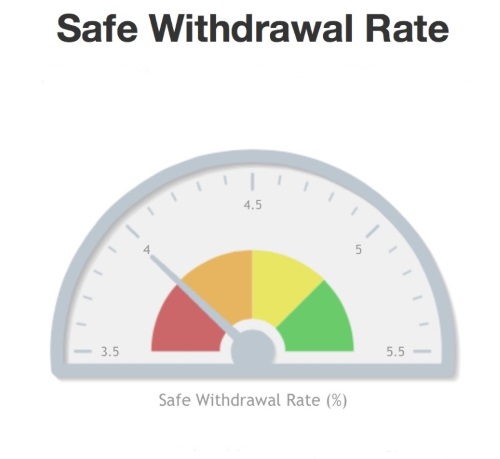
“What is 4% withdrawal rule and how does the above relate to this?”
The 4% rule is often presented as a virtually fail-safe guideline cum regimen for making sure you don’t out of money before running out of life.
The gist of it:
Just withdraw 4% of your nest egg the first year of retirement, increase that dollar amount each year by inflation to preserve your purchasing power, and you have an 80% to 90% assurance that your savings will last at least 30 years
But it’s not quite that straightforward.
To see why, let’s look at an example. Say you retire with RM 1 million nest egg. Going by the 4% rule, you would withdraw, RM 40,000, or 4%, your first year of retirement and then, assuming inflation runs at 2% a year, you’d pull out RM 40,800 the second year, RM 41,600 the third, RM 42,450 the fourth and so on the rest of your life.
Simple and exact, no?
Trouble is, life isn’t so easy and exact. Just as what we highlighted above.
Any single or interaction of unforeseen circumstances beyond your control can wreak havoc with any retirement plan you started off with.
Unlike things like whether to extend financial help to your relatives, how much return Mr Market decides to give you in any given year is entirely up to him.
The real threat to your retirement security comes when Mr Market goes into manic depressive mode early in retirement.
You don’t have to look back very long to find periods when the stock lost 50% or more of its value. That happened between 2000 and 2002 and again between 2007 and 2009.
If you’re unfortunate enough to get hit with such a big loss during your retirement in Malaysia, or even an extended period of weak gains, especially early in retirement, the chances of your retirement savings lasting 30 or more years with 4%-plus-inflation withdrawals can drop like a brick.
The reason is that the combination of your withdrawals and investment losses can so deplete the value of your retirement nest egg that you just don’t have enough capital left to repair the damage when the market eventually turns around.
But there’s another way you can run afoul following the 4% rule. If your retirement portfolio thrive, limiting your withdrawals to an inflation-adjusted 4% could leave you sitting on a big pile of savings late in retirement, possibly more than you had when you retired.
Granted, this may not seem like much of problem. But ending up with a large nest egg late in life could mean that you economized unnecessarily early in retirement, the very time when you probably could have most productively enjoyed spending some extra dough traveling, trying out new hobbies or other activities or just indulging yourself occasionally.
There are other potential issues with blindly sticking to the 4% rule. For example, a spike in inflation could rocket the size of your withdrawals so much that you deplete your retirement nest egg much sooner.
You probably want to consider moving back to your home country if this happen then.
Or you may simply find yourself unable to live within the constraints of the rule. Unanticipated expenses, especially the recurring ones, may crop up, requiring you to pull more than your planned amount each year.
Therefore, the primary question is this:
How, then, can you manage withdrawals from your savings so you don’t run out of money before you run out of life but also don’t end up discovering late in life that you unnecessarily stinted during your prime retirement years?
RetireMethod Scenario Modelling is an easy-to-follow system to cater for such retirement variables. Here’s how it would benefit your retirement in Malaysia:
Ongoing monitoring of how long, given your portfolio’s value and your current rate of spending, your money is likely to last.
Dynamically adjust your retirement nest egg withdrawals and spending as conditions change while evaluating its long term impact.
If the market is bearish, you forego boosting your withdrawal for inflation, or even reduce it a bit to give your nest egg a better chance to recover when the market rebounds.
If the market is bullish, you may use that as a chance to spend a little more and indulge yourself a bit.
Our closing comment is this:
Start with an initial withdrawal of 4%.
However, if you’re really concerned about running exhausting your retirement nest egg faster than you expect, you can start with a smaller amount, 3.5% or even 3%.
If, on the other hand, you’ve got other resources to fall back on—a pension, lots of home equity, generous relatives—you might start with a bit more, 4.5% or even 5%.
Whatever percentage you start with, be flexible about future withdrawals.
6) Retire in Malaysia: Understand taxation system in Malaysia for non-Malaysian to minimize tax impact on your retirement nest egg
As cliched as it may sound, don’t we agree that there are only 2 things certain in life:
Death & Taxes.
Some people fear taxes more than death because taxes are recurring, and you can’t run away even you are lying 6 feet below.
Well, then today I’ve got good news for you even if you are a non-resident individual in Malaysia (stay in Malaysia for less than 182 days in a year).
Here are 4 “NOT” kickers:
You are NOT taxable for any income derived outside of Malaysia
You are NOT taxable for the capital gains from your non-real-estate-property investment in Malaysia
You are NOT taxable for interest income received from Malaysian banks (such as fixed deposit in Section 3)
You are NOT taxable for tax exempt dividends received from Malaysia public listed companies (such as REITs in Section 3)
World renowned Tony Robbin’s financial adviser remarked that the 3 major destroyers of wealth are alarmingly simple. They are – fees, taxes and emotional decisions.
So you see in Malaysia, many non Malaysians sometimes cannot fathom while capital gain and passive dividend income are not taxable. The reason is that Malaysia is not following the global taxation rule.
But I am telling you it is what it is. Malaysia, unlike United States, do not practice worldwide income taxation.
7) Retire in Malaysia: Find a fiduciary financial adviser in Malaysia to stretch your retirement nest egg even further
As a practicing independent financial adviser with CFP credentials, I am firmly rooted in the belief that financial advice should be given without bias or a desire to earn investment commissions and transaction fees. Advice should be advice—not sales. Advice must be transparent and in your best interests at all times.
*The term ‘financial planner’ is used interchangeably with ‘financial adviser’, similarly, ‘independent financial adviser’ refers to ‘financial fiduciary’.
We call that a financial fiduciary.
How do you find someone like that? Aren’t financial planners tied to some banks, brokerage, investment or insurance firms?
It seems like a silly question, but here’s a quick example to demonstrate. When you walk into a butcher shop, you are always encouraged to buy meat. Ask a butcher what’s for dinner, and the answer is always “Meat!”
But a dietitian, on the other hand, will advise you to eat what’s best for your health. She has no interest in selling you meat if fish is better for you. Tied financial planners are butchers, while fiduciaries are dietitians.
A financial fiduciary is in a position whereby he represents you and put YOUR needs above his own – so they give you “conflict-free” advice. Financial fiduciaries look out for you and they will give you transparent advice and investment solutions to protect you from marketing “pitches.”
Plus, a talented fiduciary can find you investment opportunities that safely help you allocate your assets while also giving you a reasonable return – sometimes even a significant return if you find the right environment.
While many honest people work within the financial services industry, they work within a system that is set up in order for the house to win, not the clients. It’s not an evil system – just one created to grow the assets of corporations, not individual investors. However, now there is an alternative – one that has been created to serve the investor without conflict. It is called an independent financial adviser (IFA).
Beware – not all fiduciaries are created equal. The below scale will help you differentiate.
diagram source: Tony Robbins
On the left side is a salesman who might be nice and might be sincere. But, can you be sincere but sincerely wrong, yes or no?
And you move from the left side to the far right, the furthest right is a pure fiduciary, someone who is going to look out for you more than anything else.
But in addition, there are some fiduciaries that would be in the bottom right quadrant. That means they really are fiduciary, but they have low sophistication and low skills. They are very sincere and they’re looking out for your best interest, but they’re not that talented.
You want someone in the upper right quadrant, a trusted independent adviser who will put your interest above anything else, and has the sophistication and skills to help you turn your financial dreams into a reality.
If there is one single step you can take today to solidify your position as insider, it’s to align yourself with a fiduciary or an IFA in Malaysia.
CF Lieu is an independent financial adviser (IFA) with CFP qualification and licensed by the Securities Commission of Malaysia to conduct regulated financial planning activities and charge a professional fee for it.
Click Here to access a Public Register of License Holders, then search under Representatives – “Lieu Ching Foo”
CF Lieu is also listed under Featured CFP Professionals in his professional association website – FPAM (Financial Planning Association of Malaysia). Only advisers with the highest calibre and credibility are displayed under this list.
On top of that, CF Lieu founded one of the top personal finance knowledge website in Malaysia – http://HowToFinanceMoney.com
Applicants are required to comply with the following financial criteria upon successful submission of their MM2H application.
AFTER APPROVAL
Successful applicants are required to comply with the following financial Fixed Deposit placements upon receipt of the conditional approval letter from Malaysia Immigration Department.
Aged Below 50 years old
Open a fixed deposit account of RM300,000.
After a period of one year, the participant can withdraw up to RM150,000 for approved expenses relating to house purchase, education for children in Malaysia, medical purposes, rental, furniture, car purchase etc.
Must maintain a minimum balance of RM150,000 from second year onwards and throughout stay in Malaysia under this Malaysia My Second Home programme.
Aged 50 years and Above
Will either: - Open a fixed deposit account of RM150,000 OR – If full Government Pension of RM10,000 income is shown then no fixed deposit is required.
After a period of one year, participant who fulfills the fixed deposit criteria can withdraw up to RM50,000 for approved expenses relating to house purchase, education for childrenin Malaysia, medical purposes, rental, furniture, car purchase etc.
Participant must maintain a minimum balance of RM100,000 from the second year onwards and throughout his/her stay in Malaysia under this MM2H programme.
Note:
Successful applicants need to open their fixed deposits in Ringgit Malaysia (RM) only.
Participants need to obtain approval from Ministry of Tourism before proceeding to withdraw the fixed deposit.
Participants under this program may withdraw their entire fixed deposit anytime should they decide to terminate their stay in Malaysia under this program. However, they must obtain prior approval from the Ministry of Tourism.
New applicants who have purchased and owned residential property which has a PAID amount of RM1 million and above in Malaysia are eligible to apply for exemption from placing the full FD amount required of MM2H participants. They only have to comply with the basic financial requirement of FD of RM100,00 for over 50 & RM150,000 for under 50 respectively. This amount may not be withdrawn until the participants decide to terminate their participation in MM2Hprogramme.
New applicants who have purchased and owned residential property which has a PAID UP amount of RM1 million and above in Malaysia are eligible to apply for exemption from placing the full FD amount required. They only have to comply with the basic financial requirement of FD of RM100,000 for over 50 & RM150,000 for under 50 respectively.
These applicants have to observe the following conditions:
The purchased residential property may be a fully completed unit or one under construction. For any property purchased, applicants aged below 50 and those aged 50 and above must produce copies of payments made to developers, amounting to a minimum of RM1,000,000. This amount does not include legal fees, transfer fees, commissions and any other related payments
The property must cost a minimum of RM1 million OR
Several properties totalling RM1 million and above can be accumulated for this exemption
Properties must have been bought in the last 5 years only
Medical Report
All applicants and their dependents (spouse and children) are required to submit a medical report from any private hospital / registered clinic in Malaysia after Approval.
Medical Insurance
Approved participants and dependents (spouse and children) must possess a valid medical insurance policy, which is applicable in Malaysia. If any applicants are above 59 years old then this requirement is waived. This is also required after approval.
Q1: Do I need a licensed MM2H Agent to submit for my MM2H application?
Effective 9 January, 2009 foreign citizens may apply to participate in MM2H Programme directly,(applicants are NOT allowed to request friends or close relatives to submit the documents) OR they may use the services of MM2H agents licensed by the Ministry of Tourism, Malaysia. Only the directors of licensed MM2H companies with Tourism Malaysia are eligible to act as the sponsor for MM2H participants.
The MM2H application requires a submission of Personal Bond signed by the Sponsor with stamping duties paid for each individual participating in this Programme. The engagement with a Licensed MM2H agent will ensure that your MM2H application to be submitted with complete documents as required by the Ministry of Tourism Malaysia. You do not need to be present in Malaysia during the application period. We as your MM2H agent will guarantee to obtain the MM2H Approval for you or we shall refund in full for the amount of fees we received.
The Directors from Joy-Stay (MM2H) Sdn Bhd have been MM2H Programme sponsors since 2002 and we are confident and committed to serve you and to obtain the MM2H Approval for you to live and retire in this country under the 10-yr long-stay MM2H visa.
Our fees and services are clearly detailed on our website, we believe in not having any hidden charges because we value your trust in us.
Q2: Who grant the approval of MM2H application?
The Ministry of Tourism Malaysia and the Immigration Department of Malaysia.
Q3: Do I need to be in Malaysia for the application of the MM2H program?
No, you do not have to be present in Malaysia at the time of submission and during the processing period of the MM2H application. We as your MM2H agent will take care of all matters arising during this time; We will complete the application with close follow-ups. As soon as we obtain the MM2H Conditional Approval Letter from the Immigration of Malaysia, you (spouse and dependents, if applicable) will then make arrangement to visit Kuala Lumpur to complete the conditions set forth by the Immigration Department and to receive the MM2H Pass & Visa endorsement(s) on the passport(s).
Q4: Do I need to be in Malaysia when applying for a renewal?
Yes, all participants MUST be present in person with their passports in Malaysia to receive the renewals or extension of the MM2H Pass endorsements from the Immigration of Malaysia.
Q5: Can I use my existing non-cash assets in Malaysia to fulfill the MM2H condition?
No, they cannot be considered equivalent to the required Fixed Deposit stated in the Conditional Approval Letter by the Immigration of Malaysia. You may apply to withdraw part of Fixed Deposit one year after the issuance of your MM2H Pass.
Q6: How long does it take for my MM2H application to be processed and approved?
As of January 2015, the processing time is about 3 months for applications which are not selected for financial verifications.
Q7: What do you advise me on improving my chances of MM2H approval?
In order to receive MM2H approval, you must show that you have a strong financial background by providing complete documents for latest 3 months cash-in-bank statements and monthly income.
Q8: What were the main reasons applications were being rejected?
MM2H declined applications are due to the failure in showing proof of minimum financial status. In addition, applicants who submit applications with incomplete documents and failure to submit the required Letter of Good Conduct which are acceptable by the Immigration Malaysia would be declined accordingly.
Q9: If I have been staying in Malaysia for years, can I apply for MM2HP?
Yes, provided you have a valid Social Visa at the point of application and are able to fulfill all the requirements as per our MM2H CheckList. The application can be done by the MM2H Agent while you are in Malaysia.
MM2H VISA
Q1: What is MM2H Pass ?
MM2H Pass & Visa = MM2H-10-Year-Social Visit Pass with Multiple Entry Visa (MEV)
Successful applicants will be issued MM2H Pass as long as the holders do not violate the rules and regulations of the Immigration Department of Malaysia. The MM2H Pass is renewable / extendable at the end of the 10-year period provided you fulfill all criteria set forth by the Immigration of Malaysia.
Q2: If my passport is valid for the next 3 years, will I receive the full ten-year visa endorsement ?
The MM2H Pass will be issued based on the validity of your passport. You will be entitled to receive up to ten (10) years Pass if your passport is valid for the next ten years. If your passport in only valid for 3 years, you will be issued a 3-year Pass. You will receive the balance of the 10-year Pass after you renew your passport.
Q3: Do I need to be in Malaysia when applying for extension or renewal?
Yes, all participants must be present in person with their passports in Malaysia whenever they wish to receive the MM2H Pass endorsements from the Immigration Department. All extension or renewals must be done at least 2-3 months prior to the expiry date. You may submit the renewal application by yourself or engage Joy-Stay as your MM2H Agent to complete the application.
Q4: What is the minimum days to stay in Malaysia per year after obtaining the MM2H Pass endorsement?
There is no minimum days you require to stay in Malaysia per year. You may visit and leave as you wish with no restrictions after you obtained the MM2H Pass endorsement.
Q5: After joining this program, can I apply for Permanent Residency?
Currently, our Immigration does not consider the period of stay under the MM2H Programme to fulfill the PR’s requirement. Therefore, living in Malaysia under the MM2H Programme does not qualify you for the PR status in Malaysia.
DEPENDENTS / CHILDREN / EDUCATION
Q1: Who qualifies as dependents?
Applicants may include legal spouses and children under the age of 21 as dependents. Applicants can also apply to include Parents over age of 60 included after the Main Applicant received the MM2H Pass.
Q2: What’s the maximum age for children to apply under the family application?
All children must be under 21 at the time of issuance of MM2H Pass.
Q3: If my children are already married and want to study in Malaysia with their husband, do they need to pay the fixed deposit?
They should apply for the Student Pass to study in Malaysia.
FIXED DEPOSITS
Q1: Can I withdraw my fixed deposit after successfully joining MM2H? If not, when can I withdraw my fixed deposit?
You may only withdraw up to MYR50,000.00 or MYR150,000.00 (whichever is relevant to you) after a period of one (1) year from date of issuance of MM2H Pass with prior written approval from the Ministry of Tourism for expenses relating to house purchase, car purchase, education expenses for children in Malaysia and medical expenses in Malaysia. A minimum balance of Fixed Deposit of MYR100,000.00 or MYR150,000 must be maintained from the second year onwards and throughout the duration of participation under MM2H Programme. You may withdraw the whole fixed deposit if you decide to terminate your MM2H Pass by obtaining the Approval letter from the Ministry of Tourism accordingly.
Q2: Can I withdraw my fixed deposit any time during my stay in Malaysia?
Please refer to above. You are not allowed to withdraw the fixed deposit for the whole duration of the first year period unless for emergency cases and with prior written approval from the Ministry of Tourism.
Q3: Can I place the fixed deposit in a Malaysia bank located in my country for MM2H?
No, you have to place the required fixed deposit in any bank located in Malaysia.
Q4: Which banks am I required to place my fixed deposit FOR MM2H?
You may place your fixed deposit at any banks here, including foreign banks with local branches in Malaysia.
Q5: Can I place the required fixed deposit in a foreign currency for MM2H?
The fixed deposit for this program must be made in Malaysian Ringgits; any amounts beyond the stated requirement can be made in other foreign currencies.
Q6: Can the purchase of a house in Malaysia which is valued more than RM500,000.00 be considered as having fulfilled the financial criteria for MM2H?
No, you must fulfill the fixed deposit requirement. The purchase of a house is not compulsory for participants under MM2H.
Q7: Am I allowed to make withdrawal from my fixed deposit for a few months and then topped it back later for MM2H?
No, you are not allowed to do this, unless for an emergency purpose with prior written approval from the Ministry of Tourism.
Q8: How to open Fixed Deposit Account in Malaysia for MM2H?
You must be present physically with your passport and the original MM2H Conditional Approval Letter at the bank in order to open the bank accounts here.
Q9: Can I open a current account with the banks in Malaysia for MM2H?
Yes. As above, you must be present physically with your passport and the original MM2H Conditional Approval Letter at the bank. Some banks might require an introducer before you could open a current account.
INVESTMENT
Can I open a restaurant, book shop or clinic in Malaysia under MM2H?
MM2H participants are allowed to invest and actively participate in business, subject to existing Government policies, regulations and guidelines which are in force for the relevant sectors. Participants can participate in the local share market.
For more information on investing in Malaysia, please contact:
Malaysian Industrial Development Authority (MIDA)
Level 4, Plaza Sentral
Jalan Stesen Sentral 5
Kuala Lumpur Sentral
50470 Kuala Lumpur
Malaysia
Tel: 603 – 2267 3633
Fax: 603 – 2274 7970
E-Mail: promotion@mida.gov.my
Website: www.mida.gov.my
EMPLOYMENT
Can successful applicants be allowed to seek employment in Malaysia under MM2H?
Qualified MM2H participants aged 50 and above with specialized skills and expertise that are required in the critical sectors of the economy, are allowed to work not more than 20 hours per week.
The application for the special part-time work permit must be submitted and processed by the Immigration and it is subject to the Immigration’s approval.
HOUSE PURCHASE
Q1: What types of properties are allowed to be purchased by the MM2H participants?
All participants are allowed to purchase residential properties at the minimum purchase price for foreigners established by the respective state governments. Please refer to the Ministry’s Webpage “Purchase a House” for details.
Q2: Can the purchase of a house in Malaysia be considered as having fulfilled the financial criteria for MM2H?
No, participants are required to fulfill the fixed deposit requirement. The purchase of a house is not compulsory under MM2H. Only with prior written approval from the Ministry of Tourism, a portion of the fixed deposit may be withdrawn for payment made for house purchase one year after the issuance of MM2H Pass.
Q3: Can I purchase a house for residential purpose and a shop lot to be rented out?
You are only allowed to purchase residential properties under the MM2H status. You need to set up a Registered Company here in order to purchase any commercial properties.
Q4: In the event of unforeseen death is the participant able to hand over his Malaysian assets to any of his beneficiaries smoothly. Does the Government have any restriction on this matter?
Yes, provided he/she has a Will which indicates clearly to whom the properties are to be given. If not the next of kin of the participant will have to apply to the Government to have his properties released to them as the rightful heirs. Consult an independent adviser like CF Lieu to write a will for you.
Q5: Must I buy new properties only from developers, or can I purchase any property from individual owners (second hand or third hand property)?
You can purchase any type of housing properties provided that the properties have been issued with CF (Certificate of Fitness) directly from the developers or from private individuals for MM2H.
Q6: Can I apply for local financing from a local bank to purchase a house in Malaysia under MM2H?
Yes, you may apply for the loan in Malaysia subject to the terms and conditions of respective banks or financial institutions.
Obtaining a MM2H visa is like having an option to drive Ferrari in your home country or a Lamborghini in Malaysia.
Zero taxes on foreign remittances into Malaysia. Any income and pension from your home country can be remitted here without any taxes.
You can buy a tax-free car or import your existing car tax-free. One car per application, either import or purchase but not both.
You are allowed to purchase medical insurance from insurance companies operating in Malaysia. Popular and globally known insurance companies are AIA, Allianz, Manulife & Prudential.
You can bring in a maid who has worked for you before you move to Malaysia.
Parents of main applicant (not the parents of the spouse) who are more than 60 years old can be made dependents of the visa. He/she can bring in his/her parents as dependents and are given a renewable 6-monthly visa.
Children with the MM2H visa are allowed to study in local private schools and colleges.
Participants are who older than the age of 50 may be able to work part time (20 hours a week) but it is subjected to approval.
You renew the MM2H visa (every 10 years) with the same set of requirements that you have used during application. There will be no surprises and generally, renewing the MM2H visa is easy.
If there are new MM2H visa benefits, you get to enjoy them even though it is not present during the time of your application.
The following benefits are the features that makes MM2H stands out (as compared to other countries’ retirement / long term visa):
No “minimum days to stay in Malaysia” requirement. You can get the visa and start staying 20 or 30 years later
You can stay for as long as you like. You can start staying immediately after getting the visa and never leave Malaysia at all. You just need to renew your passport at consulate in Malaysia
MM2H is renewable every ten years and it can go on indefinitely. No worries about “I am not staying in Malaysia and the visa is a waste”
You are given multiple entry visas and you can go in/out of the country as many times as you like without informing the authorities
You are not required to buy or rent a property. You are not required to have an address in Malaysia. You can stay with your friends or not even staying here at all.
You don’t have to report to anyone or any authorities on where you stay. You can stay anywhere you like (Except Sabah and Sarawak).
The minimum age is low at “above 21 years old” and we have many young entrepreneurs, especially those working on the internet staying in Malaysia under this program. Thus, MM2H is not only a retirement visa but a long term visa.
When MM2H visa was created years ago, a reference and comparison with similar programs from other countries were made. The deficiencies and complaints that were made against these programs were addressed by MM2H, thus making it the ideal program. Examples of complaints are:
1. Retirement visa that is valid for one year only (10 years for MM2H)
2. Renewal of visa is a pain as it depends on the whims and fancies of the local Immigration officer who may interprete the requirements differently. (MM2H application and renewal is centralized in Putrajaya)
3. The conditions and requirements keep on changing and I am not sure if I want to invest so much in this country. What if I cannot renew my long term visa? (MM2H practices “grandfather clause”)
4. I don’t want to stay most of my time in the country and I may want to travel around. (MM2H has no “minimum to stay” and you are allowed to enter/leave Malaysia as many times as you like)
5. I am not ready to buy or rent any properties yet. Moreover, it is a big investment. (MM2H does not force anyone to buy or rent any properties).
6. I don’t want to report to anyone on where I stay or where I plan to go. (MM2H does not require you to report to the authorities or have a valid address in Malaysia. The authorities does not ask anything from you. You are free to do anything here in Malaysia as long as it does not go against the law or MM2H requirements)
In Malaysia, English is widely spoken and understood; the rule of law is rather strict; MM2H holders are treated more like locals than foreigners; inheritance law is observed and there are no inheritance taxes; people here are friendly and it is from their heart and not a hypocrisy; properties are purchased under ones’ name and not under a company (and through a complicated proxy process); violence is not tolerated; racial and religion tolerance is the norm and widely accepted as it brings prosperity and peace and lastly, Malaysia has great infrastructures that are comparable to developed countries but with a lower cost of living.
RetireMethod is EXACTLY for someone is looking for money management strategies in order NOT to outlive their retirement funds.
In other words, so that you do not run out money before running out of life.
Disclaimer: If you are just like 20 or 30 years old, then this might not be for you.
**********
You might say – “I am a CFP/banker/fund manager – I know all these stuff about retirement planning”
Well, I have gone through CFP Module 5: Retirement and Estate Planning topic itself, but the stuff we talk about in Retire Method are advanced topics that are not even demonstrated properly in the CFP program.
Still not convinced? After all, who am I to be telling you all this, right? –
“You probably eat salt more than I eat rice” – Chinese saying.
Ok, ok – Let the content preview below do the talking.
Here are the first three retirement awareness videos for a start, when I first crafted this program back in 2013.
Leaving a Legacy for the next Generation
This section shows you how to dynamically manage your retirement fund by adjusting to life events post retirement.
And still leave a desired amount of legacy to the next generation while you are at it.
Without having one million of retirement nest egg.
Don’t believe me? Then you have to watch this.
I call it the Scenario Analysis Modelling system
How Losing Money affect your entire Retirement Landscape
We WILL definitely lose money, big or small (hopefully not too BIG) in our post retirement investment. It’s just a matter of when, not “what-if”.
I always think of the worst-case scenario.
If monetary losses happen, we will need to make adjustment in our lifestyle so that we still have money to last throughout the remaining years.
Therefore, we need to be flexible. Cut back expenses for a few years. Forego that vacation.
Sacrifice a bit on our lifestyle, maybe for a couple of years.
But how much to cut back? How much is enough?
Financial plan usually don’t take this into account because it is difficult to model or forecast.
That means no single financial plan for retirement is 100% accurate.
Without periodic review, that is.
BUT…!
By knowing the “system”, you could see for yourself how this impact your entire retirement landscape objectively.
Here’s the tutorial lesson to SHOW you to prove my point. Today.
p/s – Losing money in the early years of retirement brings more impact than losing the same amount later in your retirement, assuming everything being the same.
This would be the most important take-away thus far.
I bet your unit trust agent or insurance agent never ever told you this level of detail.
Getting Consistent Passive Income Post Retirement
After going through the previous 2 videos, you may ask –
“Why only aim for 6 percent annual return post retirement?”
“And how?”
Like I said, I am not talking about bond funds. That’s just so “textbook” as what is advocated in conventional retirement planning/management.
The thing I want to talk about is REIT
This could potentially be better than bond funds.
Ok, talk is cheap, let’s listen to this:
Planning for Medical Expenses Post Retirement
If you think 3 percent annual inflation is a painful reality, wait till medical inflation hits us.
It’s very real, and it’s NO laughing matter.
When I started to create Retire Method, I asked my readers how much it costs them undergoing certain medical procedures.
They gladly replied.
In fact, I got A LOT of replies.
These are current real figures told to me, and I want to share with you in this section.
Prepare for Truckload of Bullsh*t You Heard Before
In case the profanity in the title offends you, I apologize.
I am just trying to make my point clear and emphasize some of the few major myths you have heard before.
Here goes some important take-aways from the video below.
Live recording of training for CPA Australia
Did you know that I gave a talk to CPA Australia – a professional body of accountants on the topics of retirement money management, back in 2013?
I did that at their Malaysia HQ at The Gardens South Tower.
A group of respected accountants – both old, middle age and young as my audience
You are going to enjoy this –
…when I shared with my audience – about a feedback I got that “RetireMethod is like Viagra to my retirement”
I am NOT kidding…
Let the video do the talking
Part 1
Part 2
Part 3
I sincerely hope my sharing raises awareness and you benefited from the points discussed throughout the series even if you don’t join the Retire Method community.
I want to be truly honest here, is that, what I’ve shared isn’t necessarily right for you.
Your situation may be unique, so I don’t pretend to be a know-it-all person.
But if you ask me, does the methodology we have learnt so far make sense?
I think it does.
Retire Method don’t promise you instant wealth or guaranteed return – nowadays, too many products or people over promise but under deliver.
Here’s what Retire Method is about:
It is about a framework, a plan and a system that increase the odds of success in achieving post retirement financial goals.
Choose either of the payment plans before it expires
All contents will be made available to you when you bought in the program.
You still have like 30 days to decide if you find any of the content useful. If it isn’t, then by all means contact me for a refund, and you still get the keep the content you downloaded. Your access to the site would be deactivated though, so you won’t get any new content or enhancement I add from time to time.
So, as you can see, the risk is on me.
I am in the business of helping people because I see that post retirement management is something that nobody is talking about.
Only increase your spending if your investment asset is growing. Else, keep your previous year expenses.
Reduce to 3% spending of investment asset during bad times, when asset not growing.
Reward yourself to 5% spending of investment asset during good times, during economic boom.
You could spend more in your early years then reduce spending (forego inflation increases) in later years when you don’t need as much money
You could spend more in the early years and reduce your spending if you are unfortunate enough to endure an adverse returns sequence in the first decade.
You could start at 4% and increase spending if the first decade enjoy high investment returns with low inflation rate.
These are the mix-and-match variations on how to approach withdrawing money. The bottom line is, you don’t have to be a robot and mindlessly follow the inflation rate into eventual financial tragedy. Adjust spending based on actual results (growth or decline) of investment portfolio, not based on behaviour or conventional retirement model.
To rephrase the points above, the strategy employed now is annual withdrawal tagged to a fixed percentage of your principal (aka retirement asset balance). This virtually eliminates risk of failure but causes variability in income based on portfolio value fluctuations. As the retirement balance rises, you will withdraw more and as your assets fall you will withdraw less. Whether or not your spending keeps up with inflation would be determined by the growth of your assets.
Also, this simple relationship explains in just a few brief words why a man who needs RM 20k a year is rich when he has a million ringgit nest egg, while a man who spends RM 150k a year feels poor with a million ringgit – same portfolio but totally different experience.
Flexibility and rationality are the keys. This will alleviate the risk of running out of money.
One-size-fits-all is a static concept used in conventional retirement plan or calculator. They are naive and dangerous. Don’t buy into it, even sometimes it is conventional wisdom.
************
However, even these golden rules are not perfect, unless the things below are taken into consideration.
Transaction fees and commission
These fees may seem small or even negligible, but it is not. Imagine you have invested your portfolio with an adviser who charges 1% management fees based on your AUM (asset under management) while investing in unit trusts with 1-2% MER. Then, we have entry cost for unit trust to as high as 6_%. Even stock purchase/selling needs transaction fees charged by your brokerage. Taking this altogether, that is a whole lot of annual investment expenses taken out from your 4% withdrawal rate. It is a serious thing to account for.
Does conventional retirement plan or calculator takes all these into account?
I think not.
By the end of the day, we would have wondered why your retirement funds are dwindling at an alarming rate when your investment annual reports shows spectacular return.
The only solution to this is to track the absolute investment expenses yourself. There is no easy way to this.
Longevity is an acute financial problem
The longer your retirement pool has to last, the lower the percentage you can withdraw every year.
But this is a fact – people are living longer. When EPF was created, they set the retirement age at the average life expectancy in the 60’s or 70’s – around mid sixties. It was NEVER intended to fund 20+ years retirements.
Additionally, our current life expectancy is a moving target expected to increase by the time your date with death arrives.
Now that we have grasped the concept of dwindling purchasing power as years go by, we should realized a one million legacy to the next generation is not the same as us having one million now. So now, you don’t only want to pass a legacy, you want to pass on a legacy with its purchasing power intact. See how much you need here.
The term “inflation” has been over-used by now. Sometimes, it’s hard to explain this to people; so here, I found a better way to explain it – by the analogy of purchasing power. Even if you know what this is about already, don’t skip this because at the end of the video, we come to realize medical inflation rate is really a killer (pun intended).

 And this is to give you an idea of the monthly cost of living if you were to retire in Malaysia. Discretionary living costs such as eating out, travel and entertainment may vary depending on what type of person you are.
 Besides that, there are drawbacks of becoming a Ringgit millionaire too.
 “I love it here. I’ve bought a house, established a life, and my wife and I absolutely love it. The hospitals are fantastic, the staff simply amazing. I just wish that I had made the move earlier.”
 Western accreditation is also a primary factor for confidence in undergoing foreign medical treatments, and hospitals in Penang and Kuala Lumpur were among Southeast Asia’s first recipients of the United States’ prestigious Joint Commission International (JCI) certification, which is seen as the gold standard for health care service providers around the world. Now Malaysia has 10 JCI-accredited hospitals for medical tourists to book with.
 The intricacies of the



 The real threat to your retirement security comes when Mr Market goes into manic depressive mode early in retirement.


 CF Lieu is an independent financial adviser (IFA) with CFP qualification and licensed by the Securities Commission of Malaysia to conduct regulated financial planning activities and charge a professional fee for it.
 We value your privacy and would never spam you
